
The Friendship Hierarchy That Almost Ruined My Relationships

This is a post written in collaboration with Allison from Eros and Honey - here's the post female friendships
For as long as I've been alive, friendships have confused me. I longed for the kind of friendships I saw in movies—a deep, powerful connection, an effortless shorthand, a kind of steady love that persevered and saw each other through hard times. But because these friendships were scripted, and because I didn't really understand what it meant to be a friend, I often felt a deep longing, and something was missing in my friend relationships.
This pain caused me to develop a dysfunctional and hierarchical system of friendships that took me years to uncover. It was only when I deconstructed it that I started to open space for the kind of friendships I was craving.
Friends From My Youth
When I was younger, I became friends with kids who lived in my neighborhood. We rode bikes together, played video games at each other's houses, and watched movies we shouldn't have been watching. And yet my friends—or I should say my male friends—always seemed a bit like a black box to me.
I didn't understand their internal worlds. What motivated them? Why did they like what they liked? Why did they like me?
I remember a friend of mine from my soccer team. We liked hanging out, but he always wanted to practice dribbling the soccer ball. I enjoyed playing with him, but I would get bored with dribbling after about 20 minutes, and then I wasn't sure what to do. I would sit in the grass and watch him dribble until, eventually, I told him I was going home. I never understood why he wanted to play soccer so much—I felt disconnected every time he kept playing without me.
I would fall into friendships out of proximity, convenience, or shared interest. They liked to play Super Mario Kart too, they were on my soccer team, or they were in choir with me.
But whenever I looked around, other people seemed to have friendships that were more effortless. They connected, they talked, they developed a shorthand.
I never had a girlfriend stolen away by another man (at least that I'm aware of), but I've lost countless guy friends to other male friends who just seemed to understand something I didn't get.
My Adult Life
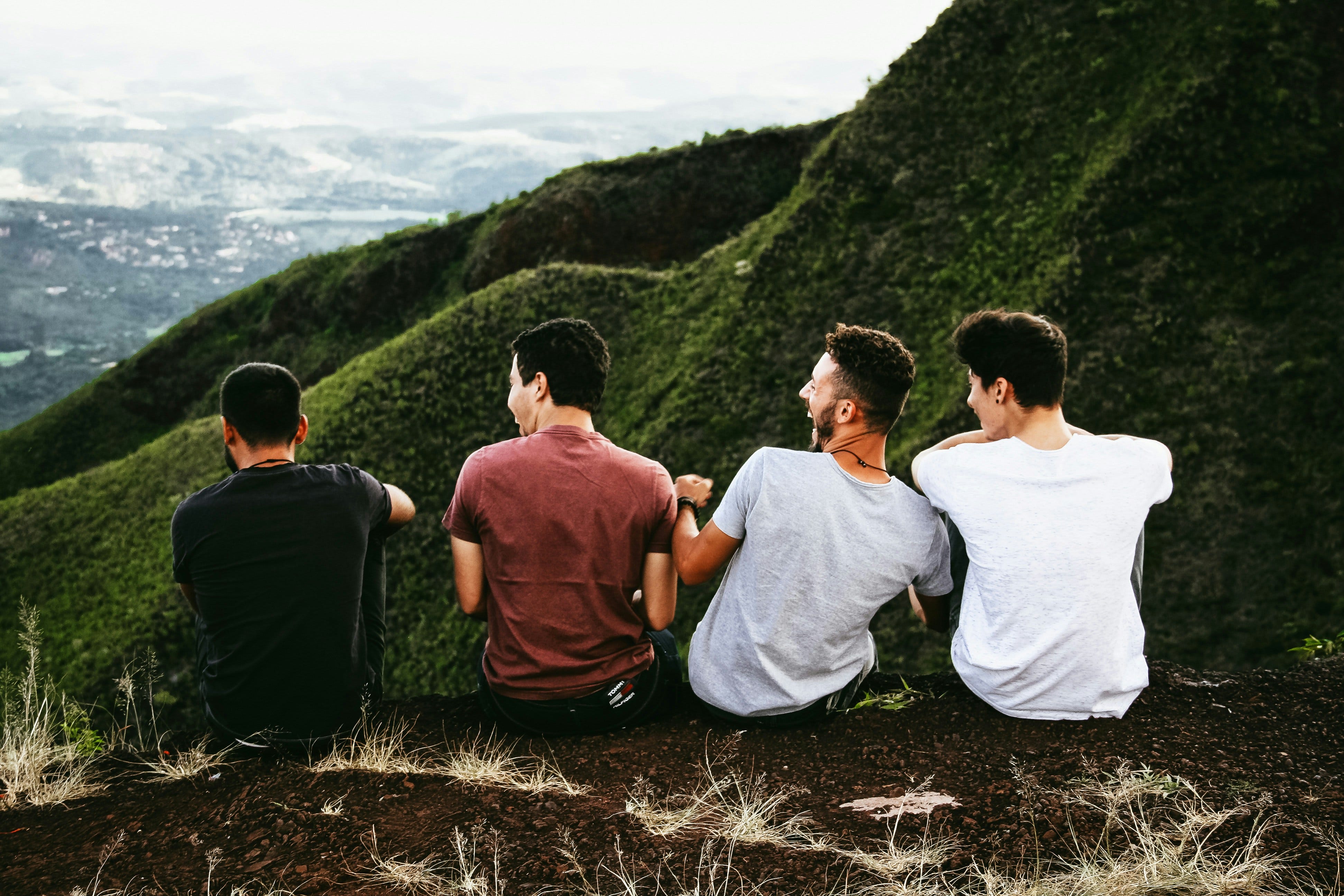
This is how my friendships went all throughout my twenties. I had friends I smoked pot with and friends I went to shows with. But my friendships never felt that deep or real, and those that did often gave me the feeling I was being taken advantage of.
Then, in my late twenties, I went through a Saturn return moment. I looked at my life and decided I didn't like it. I didn't like the music business, the constant partying, and I didn't really even like my friends. So I left it all behind to go live at a Zen monastery in Oregon.
The monastery helped me understand what it meant to live a life of intention, and I created a new life from purpose. I started to want my friendships to match.
So one day, I sat down and created a framework for friendship.
I asked myself: What makes me feel close to someone?
Shared interests and values
Being open and vulnerable
Working through conflicts and challenges to connection
Someone who pushes me but whom I can also push
Regular contact
As I looked over this list, all of these things resonated with me, but the last one felt like the linchpin: regular contact.
In the past, I had friends who shared a lot of the same values and interests, even friends who stuck with me through hard times, but the common thread was that all of those friendships faded when we stopped talking.
My closest high school friend and I grew apart after college. My Nashville friends fell away once I moved to Portland.
What I observed about the people I felt the closest connection to in life was that we talked: often, regularly, and with depth.
I noticed this especially with the other residents at the monastery. Even if I liked someone who lived outside the community, I always felt closer to my fellow residents. We ate lunch together, talked about our practices, went to the movies together, and saw each other in every high and low.
In some ways, it felt like I had unlocked the secret recipe to friendship: Find someone you gel with and make sure you talk to them on a regular basis.
That's it. So simple.
So I started looking for friends, and when I met someone I liked, the first thing I did was set up regular calls with them. My ideal schedule was once a week, because it was just the right amount of space to have something to talk about, but not so long that we started to feel disconnected.
Of course, not everyone was down with a once-a-week call.
Some people wanted to talk once a month or every other week, both of which worked for me. The worst were people who just wanted to call "whenever they felt like it." I mean, on face value, it seems like a good idea, but I knew with my ADD and very full schedule, calling every now and then basically meant never talking or talking very infrequently.
But I would usually say yes to whatever they suggested.
Then this thing started happening. It was so subtle I didn't even notice it.
I started thinking of my friendships in a hierarchy:
Level 1 - We talk every week or more and share our lives very closely
Level 2 - We talk 1-2x a month and love connecting
Level 3 - We talk every now and again, and it's nice
Level 4 - We only talk in specific situations (when I'm home, when I see them at an event, when one of us needs something)
Level 5 - We rarely talk or only in very random situations
I never consciously created these levels—they just sort of formed in my mind. And while having levels of friendship is probably fine, the real issue is that I decided only Level 1 people were my real friends. They were like the bread and butter of my life: nourishing, reliable.
Level 2-3 were possible friends or occasional friends, sort of like having dessert at a restaurant. I enjoyed them, but I didn't count on them. They were a treat and sort of a distraction.
But Level 4 and 5 people? They were fake friends—they were like Taco Bell friends. Something to be indulged in only when you need to. I thought these people didn't really care about me, love me, or consider me a friend, and so I should treat them accordingly.
I want to acknowledge this is a TERRIBLE way to think about people, because if I'm honest, most of the people in my life are Level 4-5 friends. But that didn't stop me from labeling them as fake.
Friends I had in high school? FAKE!
Friends I had in college? FAKE!
Friends I only see when I come to town? FAKE!
Friends I stop talking to for some reason? FAKE!
I basically took the majority of my friend network and decided they were garbage.
It took me years to realize I was doing this. In fact, I only started to notice because, from time to time, a Level 1 or 2 friend would want to stop connecting with me as much.
Maybe they were busy at work, or they just had a kid, or just wanted to create more time for something else in their life. Each time I had a Level 1 or 2 friend ask for a downgrade, I felt betrayed. "Fuck this guy," I thought. "Fuck him if he didn't appreciate the kind of friend I was." They weren't my bread and butter—they were a fattening doughnut.
Just like that, my "real" friend turned into a fake friend.
As a result, my experience of friendship was TERRIBLE because of this.
Yes, I created deep friendships with several guys, but those friendships were inherently fragile because they depended on regular calls to keep them alive.
The Turning Point
Then one day, I was talking to my coach about this, and she told me about her childhood best friend.
This woman was my coach's best friend and had been since she was very little. They had been there for the birth of each other's children, they loved each other deeply, and my coach felt closer to this friend than any other.
But they almost never talked. Maybe a few times a year. Except when things were really hard - then they reached out to each other. When my coach went through a divorce, she went and lived with her friend for a month, no questions asked.
Hearing this BROKE. MY. BRAIN.
How was this even possible? How was it possible that this woman could be my coach's best friend?
So I asked her, and she explained that for her, friendship wasn't about frequency or proximity. There was something deeper, something beyond time and space, something that connected her to this woman, unlike anyone else.
And from that moment on, my eyes were open to the possibility of having friends outside of regular calls.
I started to see all the people in my life whom I loved seeing only in certain situations or only from time to time, not as FAKE friends but as friends for whom my relationship was just different.
Sure, I still loved my bread and butter friends. I loved our regular calls. I loved the way we felt the rhythm and flow of each other's lives, but I started to love my occasional doughnut friends, my tasty pastry from a cart friends, my random Pop-Tart I haven't eaten in years friends.
I started to see how each of these relationships had a shape and form that worked. I started to feel the love that these unique friends have for me and I for them.
All of a sudden, what felt like a very fragile system of just a few friends started to feel like a robust network of many different people, all of whom enjoyed and cherished me.
From scarcity bloomed abundance.
Slowly, I started having conversations with my friends. Instead of assuming I understood the value of these friendships, I started asking them what our friendship meant to them. I asked them what I could do to be a better friend. I asked them if they had felt this weird way I looked at friendships (they had).
As a result, my friendships started getting better. I was able to give my friends the attention, space, and awareness they needed, and they started to understand how to communicate a need for space with me that wasn't about downgrading our friendship.
It was an incredible experience.
All of this taught me something about the nature of friendship: Just like most other relationships, we all show up with our own set of scripts, values, and ideas about what makes a friendship work, but instead of talking about those things, we tend to just communicate our values indirectly.
We tell people what we like by getting mad at them when they don't meet it.
One of the most vulnerable things we can do is have an honest conversation with someone about the nature of our relationship with them, but these conversations can be SOOOOO valuable.
When you have the courage to talk with someone about what does and doesn't work about your relationship, you open up space to really listen and deepen your connection with them.
The Challenge
So that's the challenge I have for you today:
Choose one friend. Someone you care about and would like to connect with more.
Set a call and ask them what a good friendship looks like for them. What do they value in friendships? What parts of being a friend feel hard for them?
Tell them: "I'd like to have a better friendship with you."
Ask them: "How can I be a better friend to you?"
Ask them: "Can I share some ways I love when my friends show up?"
It's important that, as you do this, you don't criticize or shame how your friends show up.
Instead, you simply want to tell this person they matter to you and invite them into a conversation around deepening your relationship.
Just like me, you may have gone through many phases of friendship in your life. Maybe you feel like your friendships are better than ever, or maybe you feel even more alone. No matter where you're at, please use this invitation as a chance to recommit to the relationships that matter to you.
I'm so glad I saw the weird way I was looking at friendships, but even more so, I'm glad that I had the courage to talk to my friends about what our friendship meant to them.
It's deepened our connection and helped me see just how many people in my life truly consider me a friend.
I loved this... Food (literally) for thought.